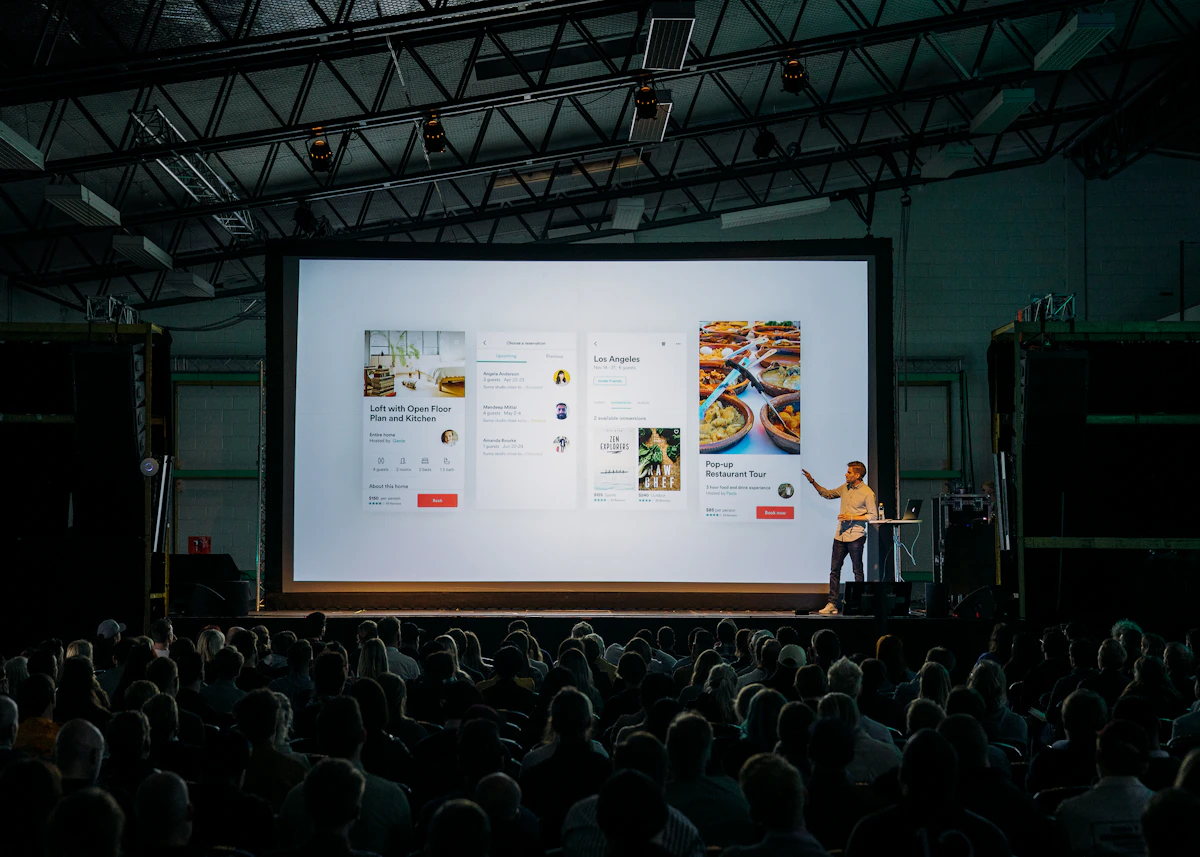
The Keynote as Product
Most companies announce products. Apple, under Steve Jobs, revealed them. The distinction matters. An announcement is information. A revelation is an experience. Jobs understood, at a level few business leaders ever reach, that how a product is introduced shapes permanently how it is perceived — not just on launch day, but for the entirety of its life in culture.
Every element of the Apple keynote was designed with the same obsessive attention that went into the hardware. The lighting on stage. The typography on the slides. The moment of silence before a product appeared on screen. The specific words Jobs chose — "magical," "revolutionary," "this changes everything" — were not marketing hyperbole. They were engineering, applied to language.
The Architecture of Anticipation
Jobs structured keynotes with the discipline of a three-act drama. Act one established context — here is the problem the world has. Act two dismissed existing solutions — and here is why nothing works. Act three introduced the product — here is what we built. This structure, repeated across hundreds of presentations, trained audiences to understand that Apple's products were not refinements. They were answers.
The famous 2007 iPhone reveal — "An iPod, a phone, and an internet communicator. Are you getting it? These are not three separate devices. This is one device" — is a masterclass in audience management. Jobs named three products, paused to let anticipation build, and then collapsed them into one. The audience understood before he finished the sentence. That understanding — arriving a half-second before the words confirmed it — is the sensation that defines a great product reveal.
Packaging as the First Interface
Jobs extended this design thinking to packaging. Apple product boxes are engineered to be opened slowly — the friction is calibrated to create a specific opening experience. This is not accidental. Jobs believed the unboxing was the first moment of truth, the first time the product made a promise. A box that felt cheap undermined the product inside it. A box that felt precious set the right expectation.
This philosophy — that the experience of a product begins the moment you see the packaging, or hear about it, or watch it being presented on a stage — is perhaps Jobs' most significant contribution to product design. He expanded the definition of the product to include everything around it. In doing so, he made design a total discipline rather than a surface treatment.
"This is the day I've been looking forward to for two and a half years."— Steve Jobs, iPhone launch, January 2007