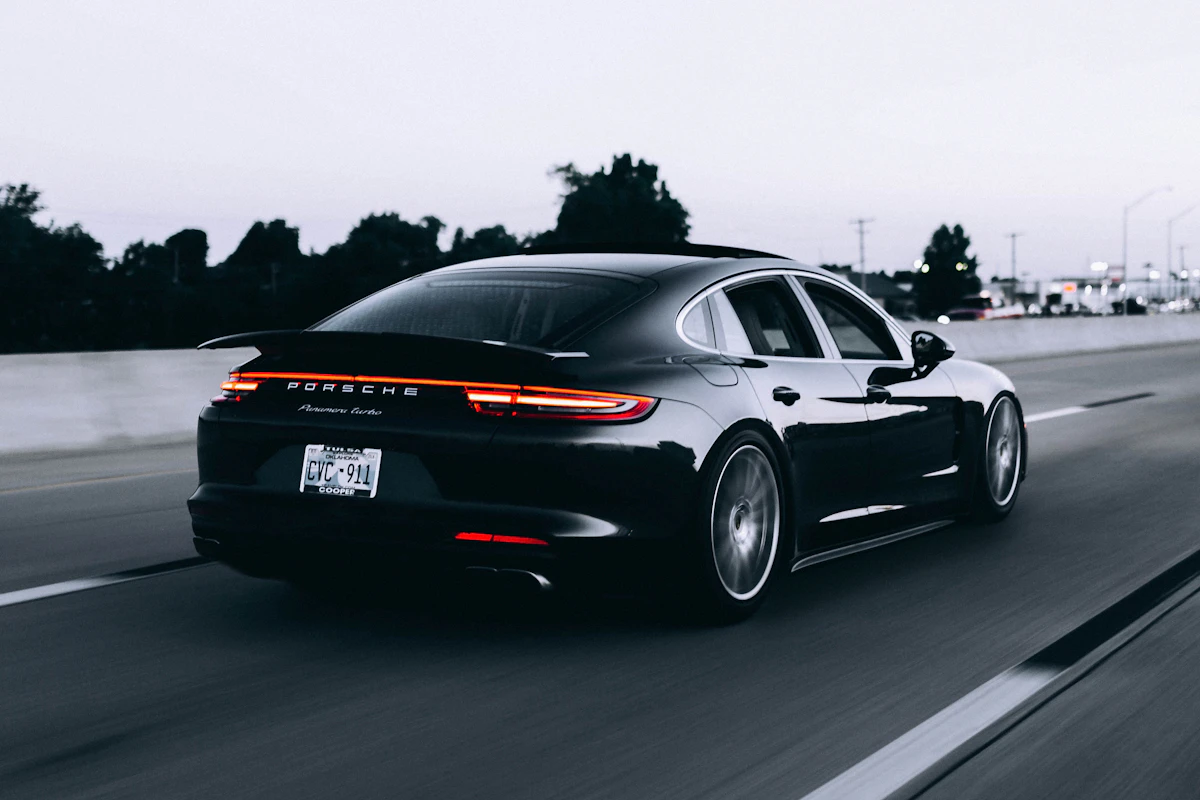
The 911 as Design Argument
The Porsche 911, designed by Ferdinand Alexander Porsche in 1963, is one of the most analyzed objects in industrial design history. In 60 years, its essential form has changed less than almost any other vehicle in production — the rear-engine silhouette, the frog-eye headlights, the taut haunches, the pronounced wheel arches. This is not conservatism. It is the recognition that the form was correct, and that correctness endures.
"Butzi" Porsche — as Ferdinand Alexander was known — left the family company in 1972 to found his own design studio in Stuttgart. His question was elegant: if the 911's design language — derived from engineering constraint, expressed through reduction and precision — was valid for a sports car, why should it not be valid for everything? The answer to that question is Porsche Design.
The Chronograph and the Cross-Category Language
The first major Porsche Design product was the Chronograph I watch (1972), designed for pilots. It was black — entirely, deliberately black — at a time when sports watches were silver or gold. The reasoning was engineering: black absorbs glare and improves legibility in cockpits. The reasoning was also philosophical: black is honest. It does not perform wealth. It performs function.
That watch established the studio's visual vocabulary for fifty years: monochromatic precision, technical material references, minimal ornamentation, maximum structural integrity. These characteristics — derived from aerospace and automotive engineering — created a new vocabulary for premium lifestyle objects that was neither fashion nor decoration, but applied performance.
Design as Transferred Intelligence
The most interesting thing about Porsche Design is not what it has designed, but what it demonstrates: that design intelligence is transferable. The same principles that make a sports car iconic — optimal form for given function, honest material expression, reduction of the unnecessary, structural tension in the remaining elements — can make a pen, a knife, a suitcase, a building iconic for precisely the same reasons.
This transferability is the deepest argument for design as a discipline rather than a set of skills. Ferdinand Alexander Porsche did not know how to design everything. But he had articulated a set of principles clearly enough that they could be applied consistently across an expanding range of categories, each time producing work that felt unmistakably like the same intelligence, expressed differently.
"If you analyze the function of an object, its form often becomes obvious."— Ferdinand Alexander Porsche