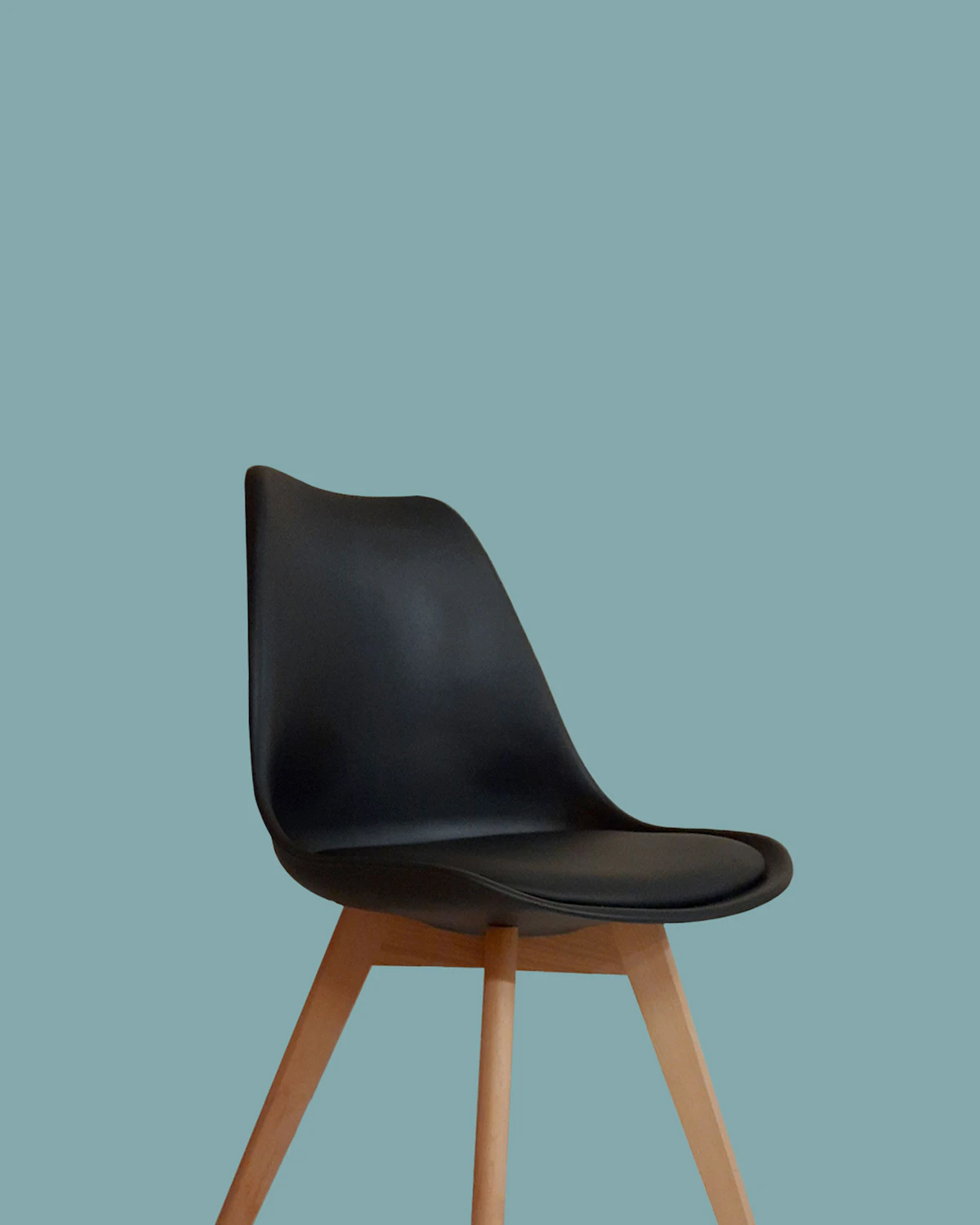
Why the Chair?
Of all functional objects, the chair is uniquely demanding as a design subject. It must support a human body in all its variety, serve multiple postures and durations of use, occupy space with or without a human present, and carry a set of cultural meanings that vary across contexts — from the throne to the folding camp stool. This multidimensional requirement makes it, in the words of architect Alvar Aalto, "the most difficult problem in design."
The chair became the central object of 20th century furniture design for precisely this reason. It was the problem through which designers defined their position: how they balanced comfort against form, craft against industrial production, organic shape against geometric precision. The differences between a Wegner chair and a Jacobsen chair are the differences between two philosophies of the human body's relationship to designed support.
The Eameses: Engineering as Empathy
Charles and Ray Eames approached the chair as an engineering problem with human stakes. Their experiments with molded plywood at Herman Miller produced the DCW (Dining Chair Wood) in 1946 — a chair that anticipated the body's contours using industrial manufacturing techniques developed for aircraft production during World War II. The molded plywood conformed to the body rather than imposing a predetermined posture.
The 1956 Eames Lounge Chair and Ottoman — made from molded rosewood veneer with leather cushions — synthesized ten years of material and structural research into a chair that looked, immediately and unmistakably, like comfort. The form was generous, the materials warm, the proportions considered. It remains in production at Herman Miller seventy years after its introduction, having outlasted the technology, the fashion, and the cultural moment of its design — which is, perhaps, the strictest available test of design quality.
Wegner and Jacobsen: The Scandinavian Alternative
Hans Wegner's The Chair (1949), used at the Kennedy-Nixon presidential debate in 1960, demonstrated that a chair could be both architecturally minimal and deeply, immediately comfortable. Its form — clean oak or teak structure, woven paper cord seat — expressed the Scandinavian conviction that craft and function are not competing values but expressions of the same intelligence. Wegner designed over 500 chairs in his lifetime, each one a slightly different answer to the same fundamental question.
Arne Jacobsen's Egg Chair (1958) and Swan Chair took a different position: that a chair's form could protect as much as support — creating a spatial environment within the room, an enclosure for a single person. These forms, organic and sculptural, showed that the chair could be architecture at domestic scale. That they remain among the most recognized design objects in the world demonstrates the power of a genuinely original formal language, arrived at by solving a genuine problem with exceptional honesty and skill.
"The role of the designer is that of a good, thoughtful host anticipating the needs of his guests."— Charles Eames